
Self-driving cars, also known as autonomous vehicles (AVs), have captured the public’s imagination for years. These vehicles are powered by artificial intelligence (AI) and other technologies that enable them to navigate and operate without human intervention. The rapid development of self-driving technology has the potential to revolutionize transportation, making it safer, more efficient, and accessible.
In this article, we will explore how self-driving cars operate, the different levels of autonomy, examples of existing self-driving technologies, and their future potential.
1. How Self-Driving Cars Operate
Self-driving cars rely on a combination of sensors, cameras, radar, lidar, and AI software to understand and interact with their environment. These technologies enable the vehicle to detect obstacles, interpret road signs, follow traffic signals, and make decisions that would typically require human judgment. Here’s a breakdown of the key components:
- Sensors: These include radar, lidar (light detection and ranging), and ultrasonic sensors. Radar and lidar help the vehicle “see” the environment, detecting objects in the vehicle’s path, including pedestrians, other cars, and road infrastructure. Lidar uses laser beams to create a detailed 3D map of the vehicle’s surroundings.
- Cameras: Cameras mounted around the vehicle capture real-time images of the surroundings. These images are processed to recognize road signs, traffic lights, and other important visual cues. Some systems use multiple cameras to ensure 360-degree coverage.
- AI and Machine Learning: The car’s onboard AI system processes the data from the sensors and cameras, making decisions on how to respond. Machine learning algorithms continuously improve the car’s ability to handle complex driving scenarios by learning from vast amounts of data and real-world experiences.
- GPS and Mapping Systems: High-precision GPS helps the vehicle know its exact location on the map, ensuring it stays on course. The vehicle also uses detailed maps, which provide information about the road layout, intersections, and other features.
- Actuators: These are the components that control the car’s steering, braking, and acceleration based on the decisions made by the AI system.
2. Levels of Autonomy
Self-driving cars are categorized into levels based on how much human intervention is required. The Society of Automotive Engineers (SAE) defines six levels, from Level 0 (no automation) to Level 5 (full automation). Here’s a breakdown of the levels:
- Level 0 (No Automation): The driver is responsible for all aspects of driving, including steering, braking, and acceleration. Advanced driver assistance systems (ADAS), like lane-keeping assist or automatic emergency braking, may be present but are not considered autonomous.
- Level 1 (Driver Assistance): The vehicle may assist with one driving task, such as cruise control or steering. However, the driver must remain engaged and in control at all times.
- Level 2 (Partial Automation): The car can handle both steering and acceleration/deceleration, but the driver must monitor the road and be ready to take control at any time. Tesla’s Autopilot is an example of Level 2 automation.
- Level 3 (Conditional Automation): The car can handle most driving tasks under specific conditions, such as on highways, but the driver must be able to take over when prompted. Audi’s Traffic Jam Pilot, which was expected in the Audi A8, is an example of Level 3 automation.
- Level 4 (High Automation): The vehicle can operate autonomously in certain environments (e.g., geofenced areas or within specific geographic locations like a city). In this case, the car doesn’t require human intervention unless it encounters a situation outside its capabilities. Waymo’s autonomous taxis are a good example of Level 4 automation.
- Level 5 (Full Automation): The car is fully autonomous and requires no human intervention at all. It can operate in any environment, and there is no need for a steering wheel or pedals. A Level 5 car would be able to drive itself anywhere, under any conditions, without human input.
3. Examples of Self-Driving Cars
There are several companies at the forefront of developing self-driving technology. Some of the most notable examples include:
- Tesla Autopilot:
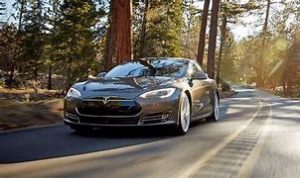
- Tesla’s Autopilot is one of the most advanced Level 2 semi-autonomous systems currently on the market. It offers features like adaptive cruise control, lane-keeping assistance, and automatic lane changes. Tesla is also working on achieving Level 5 autonomy through its Full Self-Driving (FSD) feature.
- Waymo:
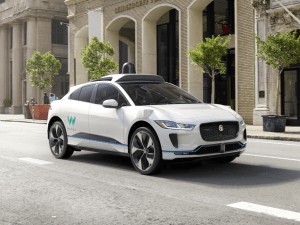
- A subsidiary of Alphabet (Google’s parent company), Waymo is one of the leading companies in the autonomous vehicle space. Waymo operates fully autonomous taxis in certain cities like Phoenix, Arizona. The company uses a fleet of Chrysler Pacifica minivans and Jaguar I-Pace electric SUVs, all equipped with Waymo’s proprietary sensor suite.
- Cruise:
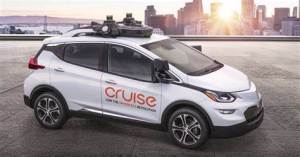
- Cruise, a subsidiary of General Motors, is developing self-driving cars and has conducted successful testing of its autonomous vehicles in urban environments. Cruise is planning to launch a driverless taxi service in San Francisco and other cities.
- Aurora:
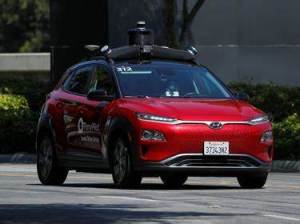
- Aurora is a self-driving technology company working on creating autonomous vehicles for both passenger transport and freight delivery. The company has partnered with companies like Uber and Fiat Chrysler to deploy its autonomous systems.
- Aptiv:
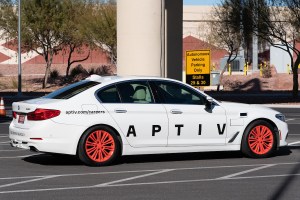
- Aptiv has developed a semi-autonomous driving system that is currently being tested in Las Vegas. The company offers autonomous rides through a partnership with Lyft.
4. Challenges and Future Prospects
While the potential for self-driving cars is immense, there are several challenges that must be overcome before they become mainstream:
- Regulation: Self-driving cars raise a host of legal and regulatory issues. Laws must be updated to accommodate autonomous vehicles, including rules about liability in case of accidents and licensing for manufacturers and drivers.
- Safety: While autonomous vehicles have the potential to reduce human error-related accidents, ensuring their safety is paramount. Self-driving cars must be able to handle a wide variety of driving situations, including extreme weather conditions and unpredictable human drivers.
- Ethical Dilemmas: Self-driving cars may encounter situations where they must make moral decisions, such as how to respond to an unavoidable accident. Developers must work on creating algorithms that can handle these ethical dilemmas in a transparent and accountable manner.
- Public Acceptance: Many people remain skeptical about the safety and reliability of autonomous vehicles. Public trust must be built through extensive testing, transparency, and education.
- Infrastructure: Self-driving cars rely on road infrastructure that may not be equipped to support them. Upgrading roads and traffic signals to communicate with autonomous vehicles will be essential.
5. The Road Ahead for Autonomous Vehicles
Looking ahead, the future of self-driving cars looks promising, with several technological advancements on the horizon. Increased sensor accuracy, improved machine learning algorithms, and better connectivity (e.g., vehicle-to-vehicle communication) will help make autonomous vehicles safer and more efficient.
As autonomous vehicles continue to evolve, they could bring about transformative changes in transportation, including reducing traffic congestion, lowering carbon emissions, improving road safety, and making mobility more accessible for people with disabilities or those unable to drive.
The future of self-driving cars is still unfolding, but as technology progresses, we may see a world where fully autonomous vehicles are a common sight on the roads.





 codersblog.com
Leave a comment