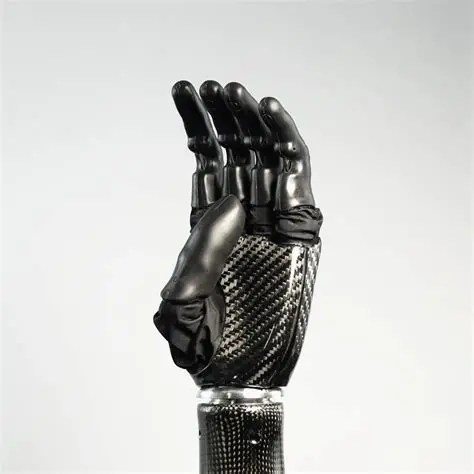
In the rapidly advancing world of biomedical engineering, bionic limbs have become one of the most promising fields. Among the latest innovations, the Ability Hand by Psyonic has emerged as a revolutionary device that merges human biology with advanced robotics. First unveiled at CES 2023, the Ability Hand is the world’s first commercially available bionic hand with multi-point touch feedback, allowing users not just to move the hand—but to actually feel what they are holding.
THE TECHNOLOGY BEHIND THE ABILITY HAND
Unlike traditional prosthetic hands that focus only on grip and movement, the Ability Hand introduces a new layer of interaction—touch-sensing. The fingertips of the device are embedded with sensors that detect pressure and translate it into vibratory feedback delivered to the residual limb. This means users can gauge how firmly they are holding something, like a grape or a plastic cup, without crushing or dropping it. The result is a more intuitive and natural user experience.
It is powered by the Qualcomm Snapdragon processor and contains firmware that enables high-speed communication between the brain, muscles, and mechanical components. The hand can respond to commands in less than 0.2 seconds, making it one of the fastest bionic limbs on the market.
DESIGN AND DURABILITY
The Ability Hand is designed with a focus on functionality, comfort, and durability. Weighing around 490 grams, it is lighter than a typical human hand, making it easier to wear for long periods. It is also built to be impact-resistant and IP64-rated for dust and splash resistance, ensuring it can function in real-world conditions, even in physically demanding environments.
Its mechanical fingers offer 32 different grip patterns, 19 of which come preloaded. These patterns can be customized by the user or a clinician, offering flexibility for specific tasks such as picking up a pencil, holding a phone, or gripping a doorknob. The thumb is capable of both manual and electric rotation, increasing the adaptability of the grip.
POWER AND CONNECTIVITY
The Ability Hand is powered by a 7.4V lithium-polymer battery that lasts between 6 to 8 hours on a full charge. It uses USB-C for charging and can also charge other devices, functioning like a small portable power bank. The hand is compatible with multiple control methods, including EMG pattern recognition, force sensors, and linear transducers, making it usable with a wide variety of sockets and medical setups.
AFFORDABILITY AND ACCESSIBILITY
One of the standout features of the Ability Hand is its price. At an estimated cost of $15,000 to $20,000 USD, it is significantly more affordable than other bionic hands with fewer capabilities. More importantly, it is covered by Medicare and private insurance in the United States, making it one of the few high-tech prosthetics that are financially accessible to a wide range of users.
Psyonic also created the Ability Fund, an initiative aimed at helping underserved individuals gain access to advanced prosthetic technology. Through this program, the company seeks to close the gap between cutting-edge innovation and real-world accessibility.
WHO USES THE ABILITY HAND?
More than 220 amputees have already started using the Ability Hand for daily tasks. Its impact, however, goes beyond human prosthetics. The device is currently used by organizations like NASA, Meta (Facebook), Georgia Tech, ETH Zurich, and Apptronik in the development of robotics and avatar-based systems. Its integration into both human and machine workflows is a testament to its versatility and future-proof design.
FOUNDER’S VISION
The mind behind Psyonic is Dr. Aadeel Akhtar, who was inspired to build a better prosthetic hand after working with amputees during his time in South America. He envisioned a future where high-functioning prosthetics were not only possible but accessible. Today, Psyonic stands at the forefront of this dream, delivering real-world solutions to people who need them most.
WHY THE ABILITY HAND MATTERS
In the bigger picture, the Ability Hand represents a significant leap in assistive technology. It shifts the narrative from simple mobility to real, sensory-based interaction with the environment. Touch-sensing doesn’t just restore function—it restores part of the human experience. It enhances independence, builds confidence, and offers users a better quality of life.
CONCLUSION
The Ability Hand is more than just a mechanical limb—it’s a symbol of how far technology has come in serving humanity. Combining speed, feedback, affordability, and durability, it marks a new era in prosthetics where bionic devices feel less like tools and more like extensions of the body. As Psyonic continues to develop and expand, the Ability Hand could soon become the global standard for what a bionic hand should be.
For more information, visit: psyonic.io or read the original feature on Interesting Engineering.




 codersblog.com
Leave a comment