
This article continues our Ultimate Guide to Nikola Tesla’s Inventions, beginning with the revolutionary creation that changed human civilization — the Alternating Current (AC) System. This was the invention that made electricity available across the world, transforming Tesla into a legend of science and technology.
THE BIRTH OF A NEW AGE OF ELECTRICITY
In the late 1800s, the world was entering the dawn of the electrical age. However, the power systems of the time were dominated by Direct Current (DC), promoted by Thomas Edison. DC could transmit electricity only over short distances and required thick, expensive copper wires. Cities could barely light a few blocks at once, and building long-range networks was nearly impossible.
In 1887, Nikola Tesla introduced an entirely new concept — Alternating Current (AC). Unlike DC, AC reverses its direction many times per second, allowing it to travel much farther with minimal energy loss. This new form of power transmission opened the door to efficient, large-scale electricity distribution. It was the invention that truly electrified the modern world.
THE HISTORY OF THE ALTERNATING CURRENT SYSTEM
Tesla’s journey with AC began after he left Edison’s company, where his ideas were dismissed. He went on to develop his own patents for AC motors, transformers, and generators. In 1888, he presented his system to the American Institute of Electrical Engineers, impressing the industrialist George Westinghouse, who recognized its potential and bought Tesla’s patents.
This partnership led to the creation of the Westinghouse Electric Company, which became the main competitor to Edison’s General Electric. What followed became known as the War of Currents — a fierce battle between Tesla’s AC and Edison’s DC systems. Despite Edison’s public demonstrations against AC, Tesla’s system proved to be far more efficient and practical for powering cities.
In 1893, Tesla and Westinghouse achieved a historic victory when their AC system was chosen to power the World’s Columbian Exposition in Chicago — the first fair ever to be lit entirely by electricity. Millions witnessed the brilliance of AC lighting, and Tesla’s system instantly became the global standard.
Two years later, another milestone was reached — the Niagara Falls Power Project. Tesla’s hydroelectric power station converted the energy of falling water into electricity, transmitting power over 20 miles to the city of Buffalo, New York. This project proved that AC could power entire cities from a single source, securing its place as the foundation of the modern power grid.
HOW THE AC SYSTEM WORKS
Tesla’s AC system works by continuously changing the direction of electrical current. This alternating motion allows for easy transformation between high and low voltages using transformers. High voltage is used for efficient long-distance transmission, and low voltage for safe use in homes and industries.
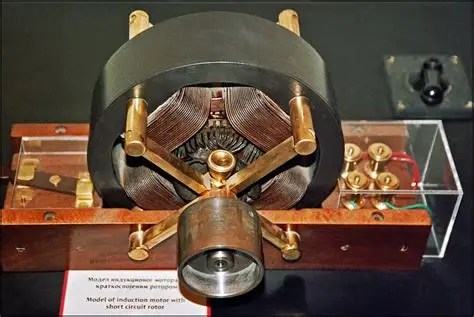
By designing generators, transformers, and induction motors to work together, Tesla created a complete and self-sustaining energy system — one that powers homes, factories, and cities around the globe even today.
IMPACT AND LEGACY
The Alternating Current system is the backbone of global electricity. Every light bulb, refrigerator, and power line owes its operation to Tesla’s genius. His vision of bringing energy to everyone became a reality, and his ideas shaped the industrial and digital revolutions that followed.
Over a century later, the world still runs on the principles Tesla designed. His AC system remains the greatest energy innovation ever built, turning imagination into illumination.
WHAT COMES NEXT
This is only the beginning of our journey through The Nikola Tesla Ultimate Guide. In the next part, we will explore The Tesla Coil — the invention that brought wireless power and radio transmission into reality, and became the symbol of Tesla’s limitless creativity.




 codersblog.com
Leave a comment